The McMinnville Sighting
Thursday, 11 May 1950. A farm outside McMinnville, Oregon.
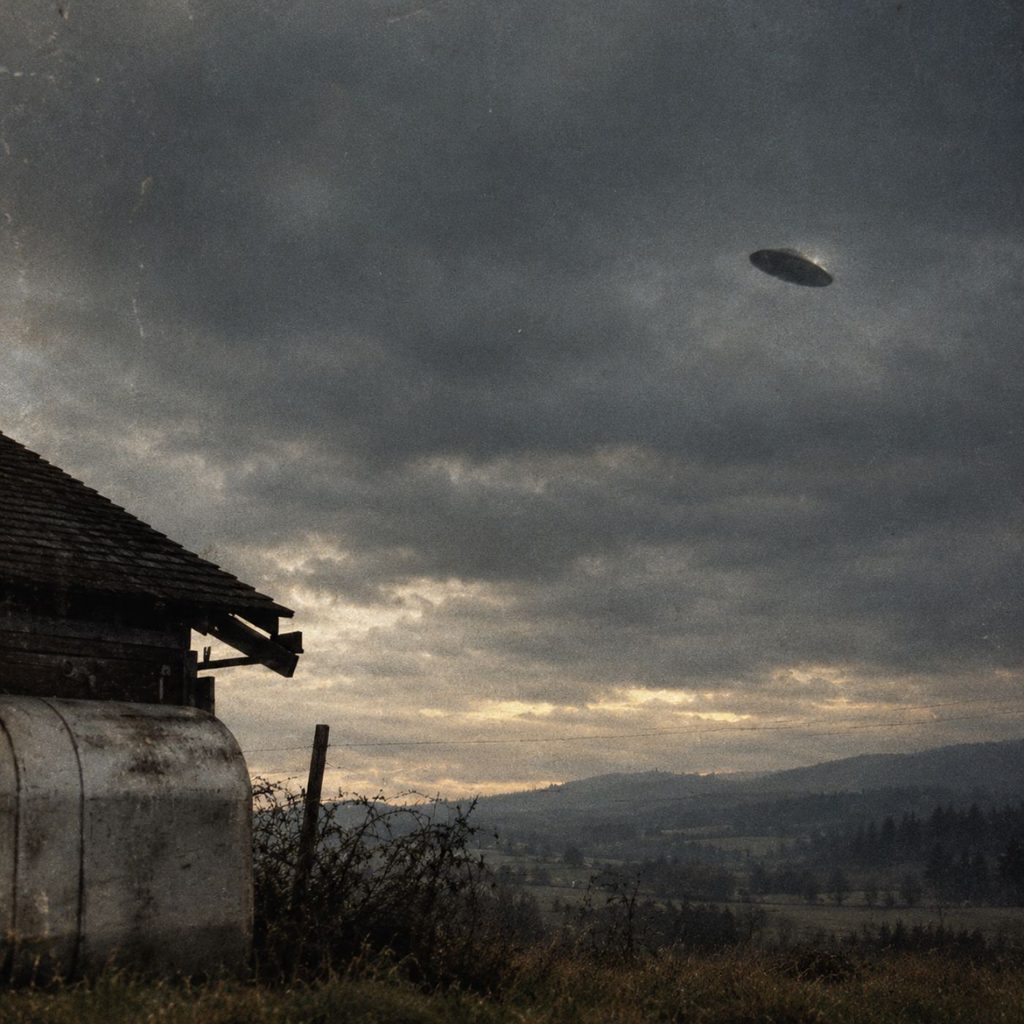
The Evening
At around half past seven on the evening of Thursday, 11 May 1950, Evelyn Trent was out behind the farmhouse feeding the chickens and rabbits. The light was fading over the fields when she looked up and saw it: a large, metallic, disc-shaped object hanging silently in the sky, a little to the northeast of the farm.
She ran for her husband, Paul, and told him to get the camera. There was a short, frantic search for it inside the house before they got back out. Paul took two photographs, about thirty seconds apart. The object drifted slowly west, then gathered speed and slid away to the northwest. It made no sound at all.
The Wait
There was no rush to tell anyone. The film stayed in the camera for weeks, and when Paul finally finished the roll and had it developed, the two pictures of the disc sat among the family’s ordinary snapshots, including photographs from a Mother’s Day picnic.
Paul kept quiet about them. Eventually he showed them to his friend and banker, Frank Wortman, who let the local newspaper, the Telephone-Register, know.
Saucerville
When a reporter came asking for the negatives, the family couldn’t find them. They eventually turned up under the couch.
The Telephone-Register ran the photographs on its front page. Within days the story was on the national news wires, and on 26 June 1950 the pictures appeared in Life magazine. The national press gave McMinnville a new nickname: Saucerville. The newspaper went on to print more than 10,000 reprints for people writing in from across the United States and Canada.
The Lost Negatives
In July 1950 the Trents travelled to New York to tell their story on the television programme We the People. The show borrowed the negatives. The Trents never got them back. They were told the negatives had been misplaced.
They resurfaced years later in a news agency’s files, and were eventually returned to the McMinnville newspaper in 1970, cropped and reduced, with parts of the original images missing.
The Investigation
In the late 1960s, the U.S. Air Force funded a three-year study of UFO reports at the University of Colorado, led by the physicist Edward Condon. Most of its conclusions were sceptical. The McMinnville photographs were different. The study described them as one of the few cases in which everything it examined was consistent with an extraordinary flying object seen by two witnesses.
In 1975 the optical physicist Dr Bruce Maccabee obtained the negatives and spent years analysing them. Sceptics have offered their own explanations, from an object hanging from the overhead wires to a truck’s rear-view mirror. More than seventy-five years later, the debate continues.
The Family
Paul and Evelyn Trent never made money from the photographs, which were reproduced around the world without their permission. They never tried to get the negatives back. In his last interview, in 1998, Paul said simply:
“I took the pictures, but I don’t want them.”
Evelyn said she would never take another picture. There had been just too much publicity.
The Festival
Seventy-five years on, McMinnville has never forgotten. Every May, on the weekend of the anniversary, people travel from across the country to the McMenamins UFO Festival at the Hotel Oregon, to listen, to question and to remember the evening the Trents looked up. The 27th festival takes place on 14 and 15 May 2027.
The Oregon Invasion
The Oregon Invasion grew out of that evening on the Trent farm. It takes 11 May as its heartbeat: the day they were first seen, and the day the people of Oregon rise up to take their home back. The story is fiction. The sky over McMinnville has a history of its own.